Strengthening cross-sector innovation between circular water systems and low-carbon construction in Southeast Europe
Bucharest, 29.01.2026
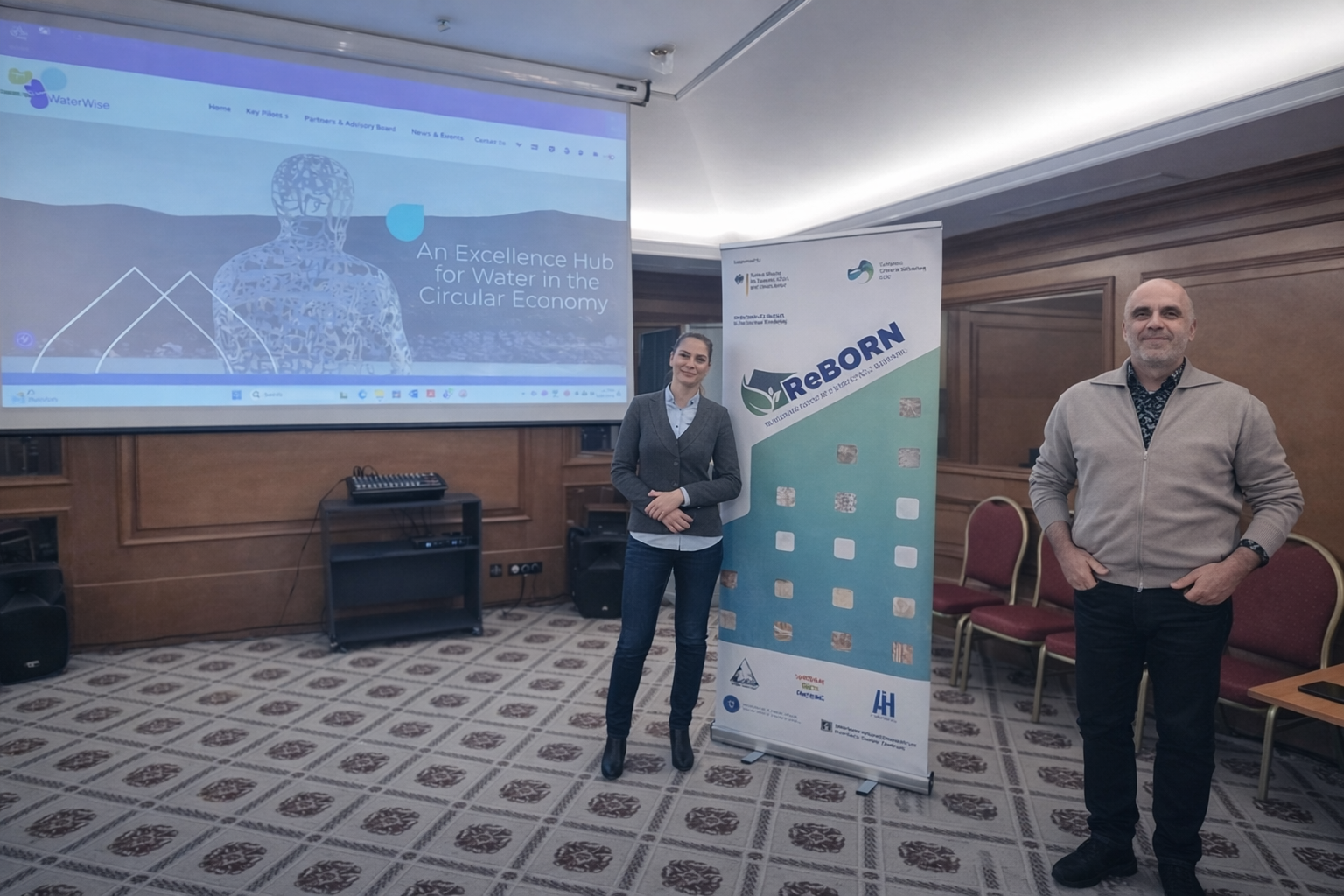
Cross-sector collaboration is essential for accelerating the green transition. At the WaterWise Hub partners meeting in Bucharest, the ReBORN project actively contributed to discussions on how circular water management and sustainable construction can reinforce each other. The exchange created valuable momentum for aligning innovation efforts, strengthening stakeholder networks, and exploring concrete cooperation opportunities within the emerging Bucharest Hub.
Roxana Boboruta, expert at the Steinbeis Danube Center within the ReBORN project, participated in the meeting held at the Grand Continental Hotel in Bucharest. The session focused on establishing the Romanian working group, which in this initial phase agreed to join a Think Tank that will lay the foundation for the development of the Bucharest Hub. Alongside the 15 members of the WaterWise Hub consortium present on January 29, an additional 14 representatives from organizations and institutions expressed their commitment to supporting the creation of the Bucharest Hub.
About the WaterWise Hub
WaterWise Hub is a European research and innovation initiative dedicated to accelerating circular and sustainable water management across Southeastern Europe, the Western Balkans, and Eastern Partnership countries. Its objective is to establish a dynamic innovation ecosystem that supports policy development, knowledge exchange, start-up and SME growth, pilot implementation, capacity building, and cross-sector collaboration to address pressing water-related challenges and promote regenerative water systems.
The project is implemented by a consortium of 21 partners from nine countries – Greece, Romania, Serbia, Albania, North Macedonia, Moldova, Ukraine, the Netherlands, and the United Kingdom. The partnership brings together universities, research institutes, industry associations, NGOs, and public authorities, representing academia, business, civil society, and government.
In Romania, the WaterWise Hub is represented by Business Development Group SRL in cooperation with the General Secretariat of the Government, INCD EcoIND, the Bucharest Community Foundation, the Groundwater Engineering Research Center within the Technical University of Civil Engineering Bucharest, and the ROTSA start-up association.
The initiative is funded by the European Union’s Horizon Europe research and innovation programme under the HORIZON-WIDERA-2023-ACCESS-07 Excellence Hubs action.
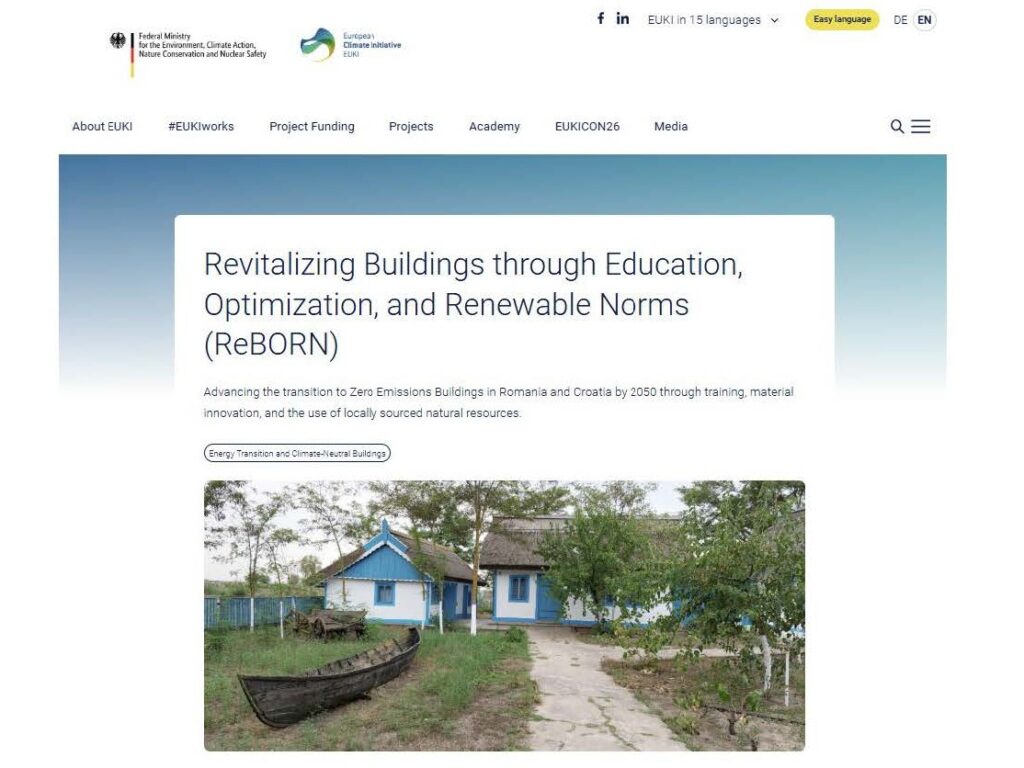
Key synergies between the WaterWise Hub project and the ReBORN (Revitalizing Buildings through Education, Optimization, and Renewable Norms)
The exchange in Bucharest highlighted several strategic intersections between the WaterWise Hub and the ReBORN project. Both initiatives operate within a circular economy framework and address complementary dimensions of sustainable transformation. Their combined expertise opens pathways for integrated solutions that connect water management, low-carbon construction, stakeholder capacity building, and policy development at regional level.
a) Circular Economy & Sustainable Resource Use
- WaterWise Hub applies circular economy principles to water systems, emphasizing reuse, regeneration, and waste minimization.
- ReBORN explores low-carbon, locally sourced natural materials (e.g., reed, hemp) for building construction — representing a circular approach to material life cycles and sustainability in the built environment.
Synergy: Both projects promote closed-loop thinking and resource optimization, enabling cross-fertilization of methodologies and frameworks for circular water systems and sustainable construction materials within integrated planning approaches.
b) Stakeholder Engagement & Knowledge Sharing
- WaterWise Hub engages a quadruple helix of academia, business, government, and civil society to co-create innovative solutions.
- ReBORN involves public authorities, local governments, NGOs, and construction professionals to foster the transition toward sustainable building practices.
Synergy: Both initiatives emphasize multi-stakeholder collaboration, creating opportunities for structured cross-sector dialogue (e.g., among urban planners, engineers, and policymakers) on integrated sustainability strategies.
c) Tools & Best Practices Development
- WaterWise Hub develops decision-support toolboxes, knowledge hubs, and investment planning instruments for circular water management.
- ReBORN produces guidelines and practical resources to support the transition to zero-emission buildings and sustainable construction standards.
Synergy: There is clear potential to cross-reference toolkits and guidance documents, supporting practitioners in adopting holistic approaches that combine water sustainability with energy-efficient building design.
Future joint opportunities within the emerging Bucharest Think Tank Hub may include:
- Integrated training modules on circular economy principles spanning both the water and building sectors.
- Joint policy recommendations for local authorities on sustainable infrastructure planning.
- Shared stakeholder workshops bringing together water and built environment professionals.
Building on Proven Project Experience
WWH partner Business Development Group SRL presented two successfully completed projects whose expertise directly informs and strengthens the development of the WaterWise Hub initiative:
- NextGenWater
This project focused on testing innovative circular water solutions, particularly in the field of sustainable sludge management. In demonstration cases such as Timișoara (Romania), thermochemical conversion processes (e.g., pyrolysis) were applied to transform sewage sludge into energy and valuable by-products, including biochar, oil, and gas. These outputs can be reused as fuel or soil enhancers, offering a resource-efficient alternative to conventional landfilling and contributing to circular resource recovery models. - AquaSpice
AquaSpice developed and validated advanced water-efficiency management methodologies, technologies, and optimization tools for industrial water treatment, reuse, and closed-loop systems. The Romanian pilot case at Agricola Bacău focused on sustainable water reuse within the poultry meat processing industry. The project demonstrated that technical innovation must be accompanied by administrative and regulatory adaptation, as permitting procedures and authorization requirements significantly influenced the practical implementation of proposed solutions.
ReBORN likewise builds on the successful EUKI-funded project EDAPHIC-BLOOM Danube. That initiative focused on enhancing carbon sequestration in soils and promoting climate-friendly agricultural practices in the Danube region. Through demonstration activities, stakeholder engagement, and transnational knowledge transfer, EDAPHIC-BLOOM Danube strengthened cooperation between research institutions, practitioners, and policymakers. It showcased practical solutions for improving soil management and reducing greenhouse gas emissions, while embedding results into regional dialogue and policy processes.
The methodological experience gained — particularly in capacity building, cross-border cooperation, and the integration of scientific results into practical applications — now directly informs ReBORN’s approach to advancing low-carbon construction materials and supporting the transition toward Zero Emission Buildings.
Together, these project experiences underline the importance of combining technological innovation with governance capacity, regulatory alignment, and stakeholder engagement — a shared principle that connects WaterWise Hub and ReBORN in their pursuit of scalable, circular transformation pathways.
Strengthening Collaboration for Circular Transformation
ReBORN project partners will continue to collaborate closely with the Romanian entities involved in the WaterWise Hub, particularly in the areas of stakeholder engagement, knowledge transfer, and capacity development. Financed under the European Climate Initiative (EUKI), ReBORN aims to improve energy efficiency and promote sustainable construction practices in Romania and Croatia. By advancing the use of locally sourced natural materials and strengthening professional expertise across the built environment sector, the project contributes to a broader circular and climate-resilient transformation agenda.
Let’s Build with Bio-Based Materials Together
Be part of the EUKI-funded ReBORN network and explore opportunities for applied research, pilot implementation and sustainable construction collaboration.