
How ReBORN and the Steinbeis model demonstrate a demand-driven pathway to market impact
Bucharest, 16.03.2026
Why This Matters
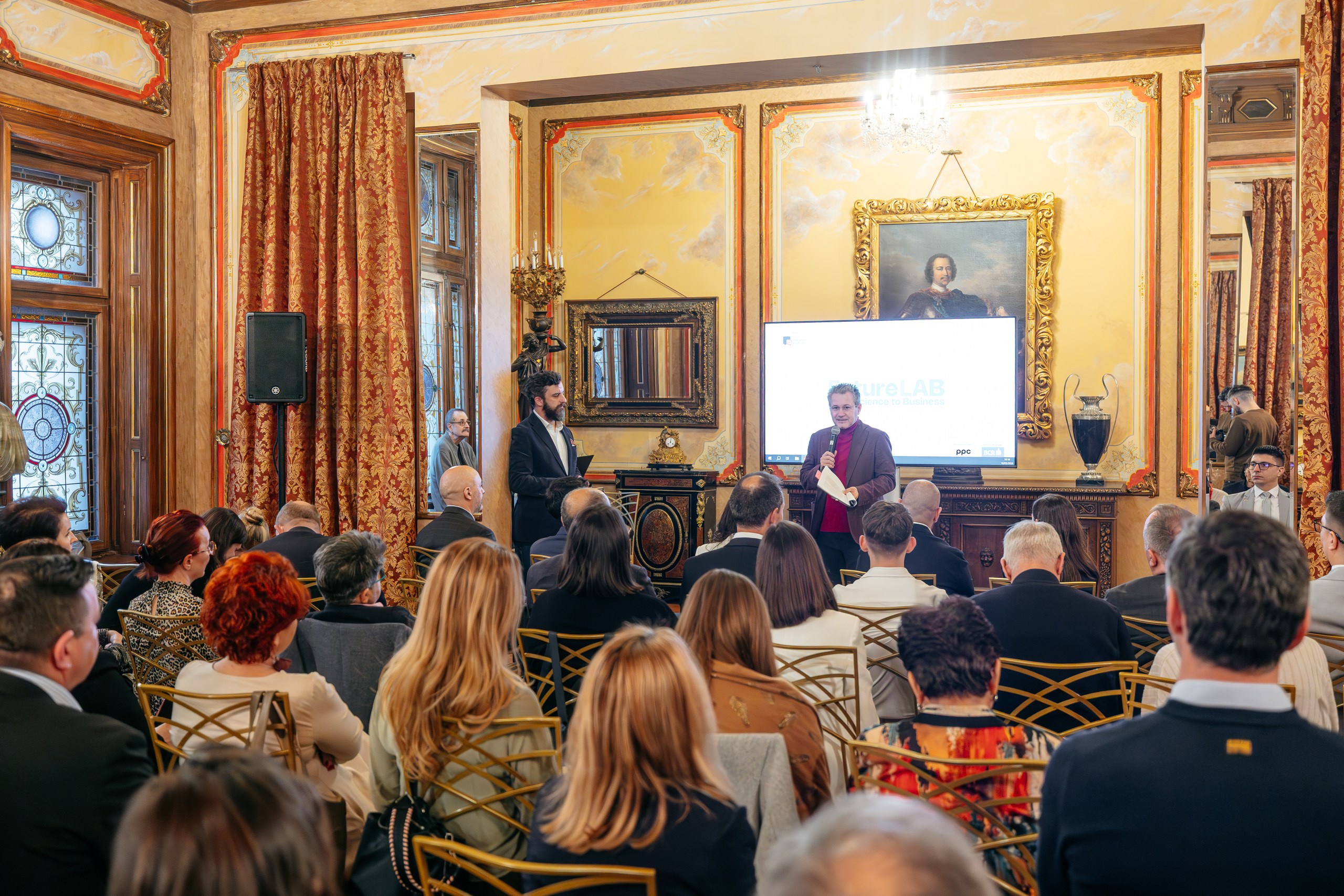
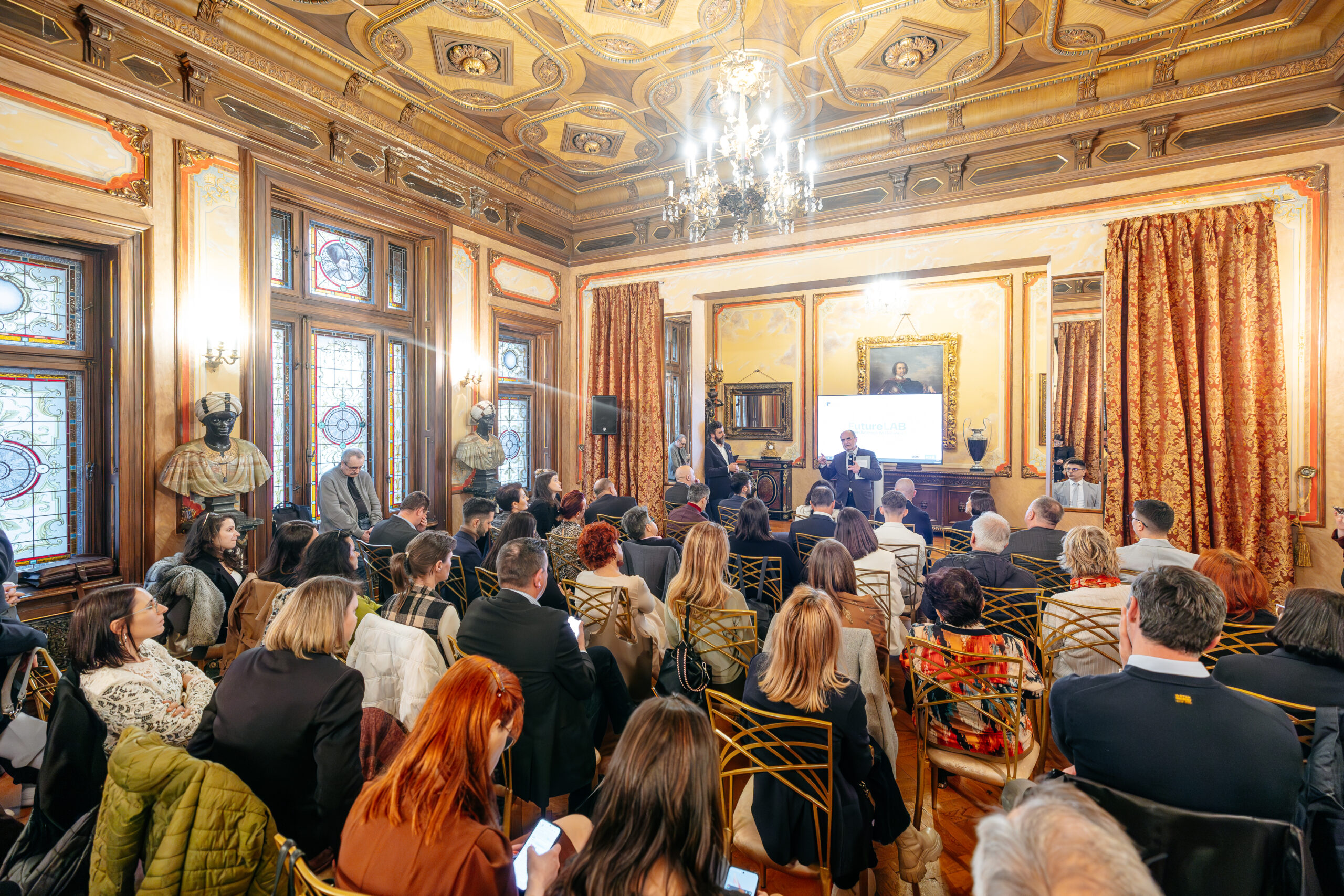
Future LAB in Bucharest marked the official launch of a national program designed to strengthen the commercialization of research in Romania. Developed by Social Innovation Solutions, the initiative brought together research institutions, companies and policymakers and served as the starting point of a multi-day program, followed by intensive training sessions for participating researchers in the subsequent days.
At the center of the initiative is a well-known challenge: how to translate scientific results into real-world applications and economic value.
Steinbeis participated in the launch event with a clear objective: to show how this gap can be addressed in practice—through the ReBORN project as an example for researchers and through a demand-driven approach to technology transfer as a key success factor.
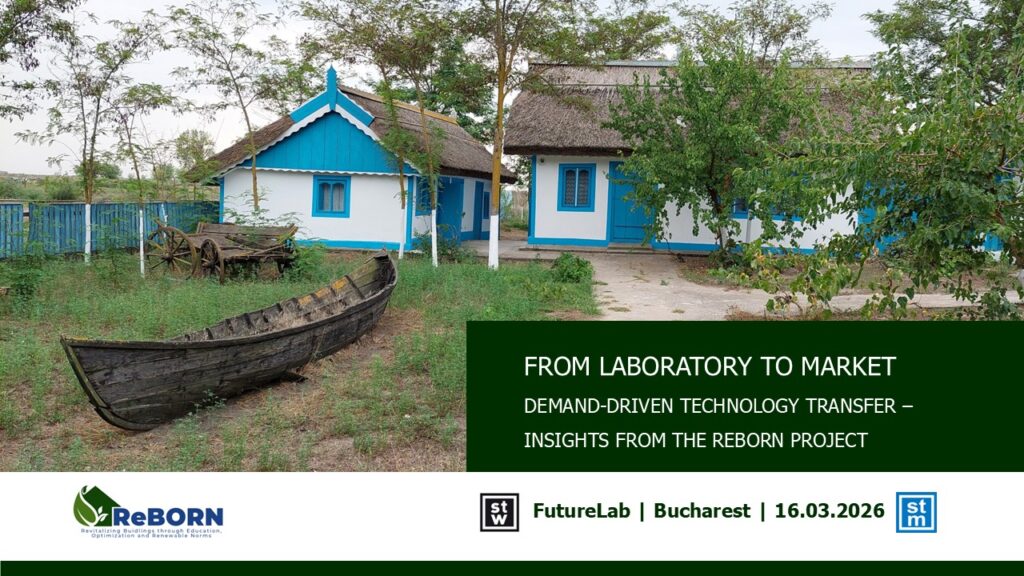
Future LAB: Bridging Research and Market
Future LAB is a national program developed by Social Innovation Solutions to accelerate the commercialization of Romanian scientific research by bridging the gap between laboratory innovations and the business sector.
The initiative brings together 25 research organisations in a structured three-month program combining mentoring, hands-on workshops, and direct interaction with the business community. Its objective is to transform academic knowledge into practical, market-ready solutions and to strengthen Romania’s economic competitiveness.
At its core, Future LAB addresses a structural challenge: while valuable research results and patents exist, the connection to market needs, validation environments, and implementation pathways is often missing. Without this connection, innovations risk remaining at the laboratory stage instead of becoming solutions for companies and society.
By focusing on skills development, collaboration, and applied tools, Future LAB creates the conditions for research to move from potential to real impact.
What the Event Revealed
The discussions at the launch event highlighted a shared understanding across policymakers, industry representatives, and the research community: bridging the gap between research and market is not a purely technical issue, but a structural challenge.
Participants emphasized that successful technology transfer requires stronger alignment of research with real user and market needs. This perspective is also reflected in the program’s analysis, where 84% of surveyed research organisations identified the correlation of research with market demand as a key priority.
In practical terms, several priority areas emerged for bringing research results closer to application within the next 6–12 months:
- feasibility and market potential assessment
- additional technical validation
- partnerships for testing and piloting
- public funding for demonstration
- private investment for scaling
Beyond these priorities, the discussions made clear that specific support mechanisms are required to enable this transition. These include access to testing environments, collaboration with relevant economic partners, targeted funding instruments such as microgrants, and resources for validation and piloting.rspective of the research community itself and underline the need for more application-oriented innovation processes.
From the perspective of the programme organisers, the key issue is not the lack of promising research results, but the absence of effective bridges between research and market.
“
Transforming Romanian research and adapting it to market needs is increasingly becoming a strategic need. Without continuous collaboration and coordination, ideas risk remaining in the laboratory and failing to become solutions for people and companies.
— Adrian Curaj, Director General, UEFISCDI
“
What is missing is the bridge between the laboratory and the market – a common language between researchers and industry and concrete mechanisms that make validation possible.
— Roxana Cojocaru, Executive Director, Social Innovation Solutions
“
Future LAB is about transforming knowledge into real opportunities for Romania.
— Ionuț Stanimir, Executive Director, Marketing and Communication, BCR
From Laboratory to Market: The ReBORN Approach
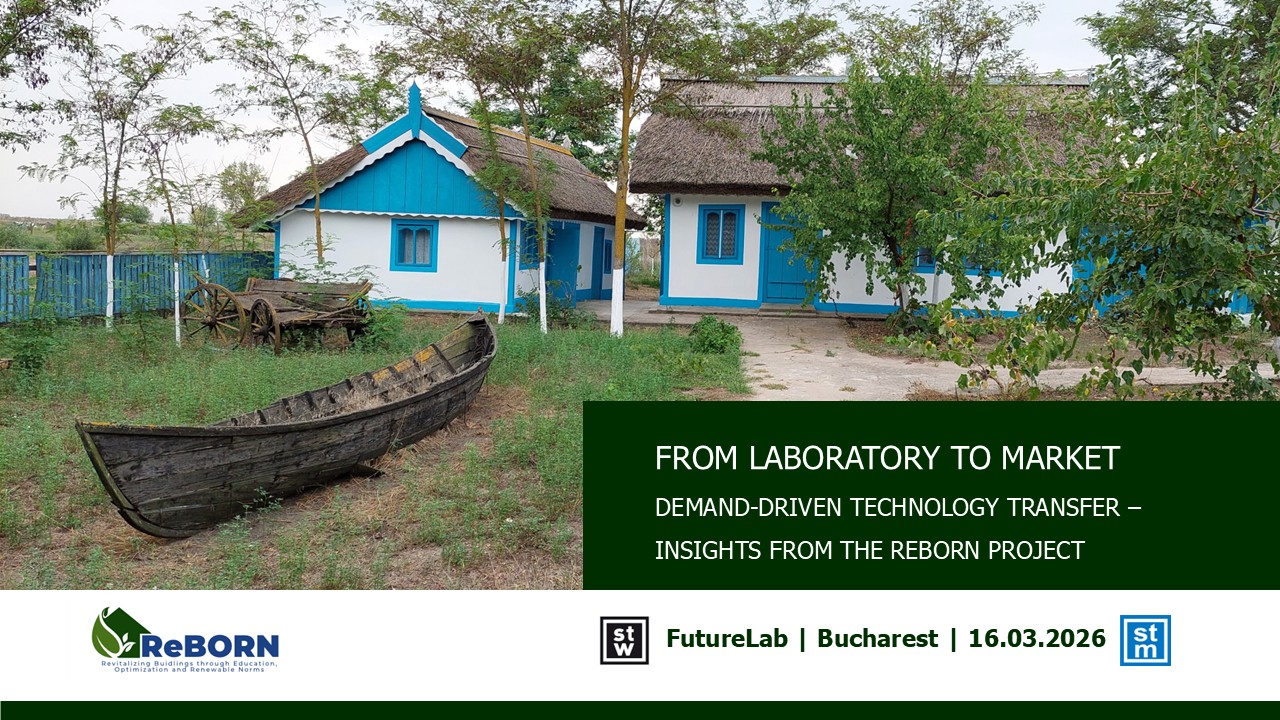
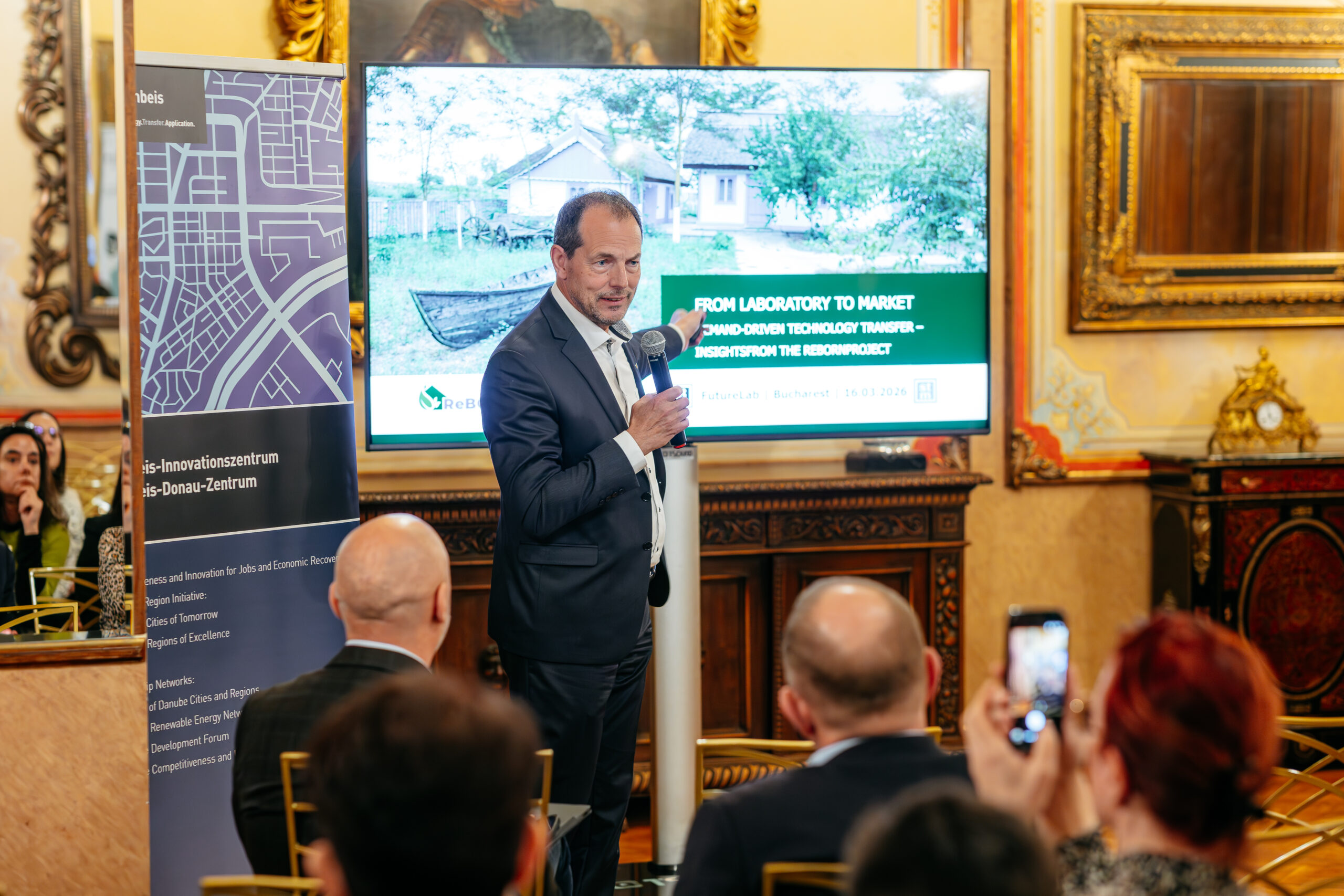
In the session “From laboratory to market,” Steinbeis contributed a practical perspective by presenting the ReBORN project, funded by the European Climate Initiative (EUKI), as a concrete example of applied technology transfer.
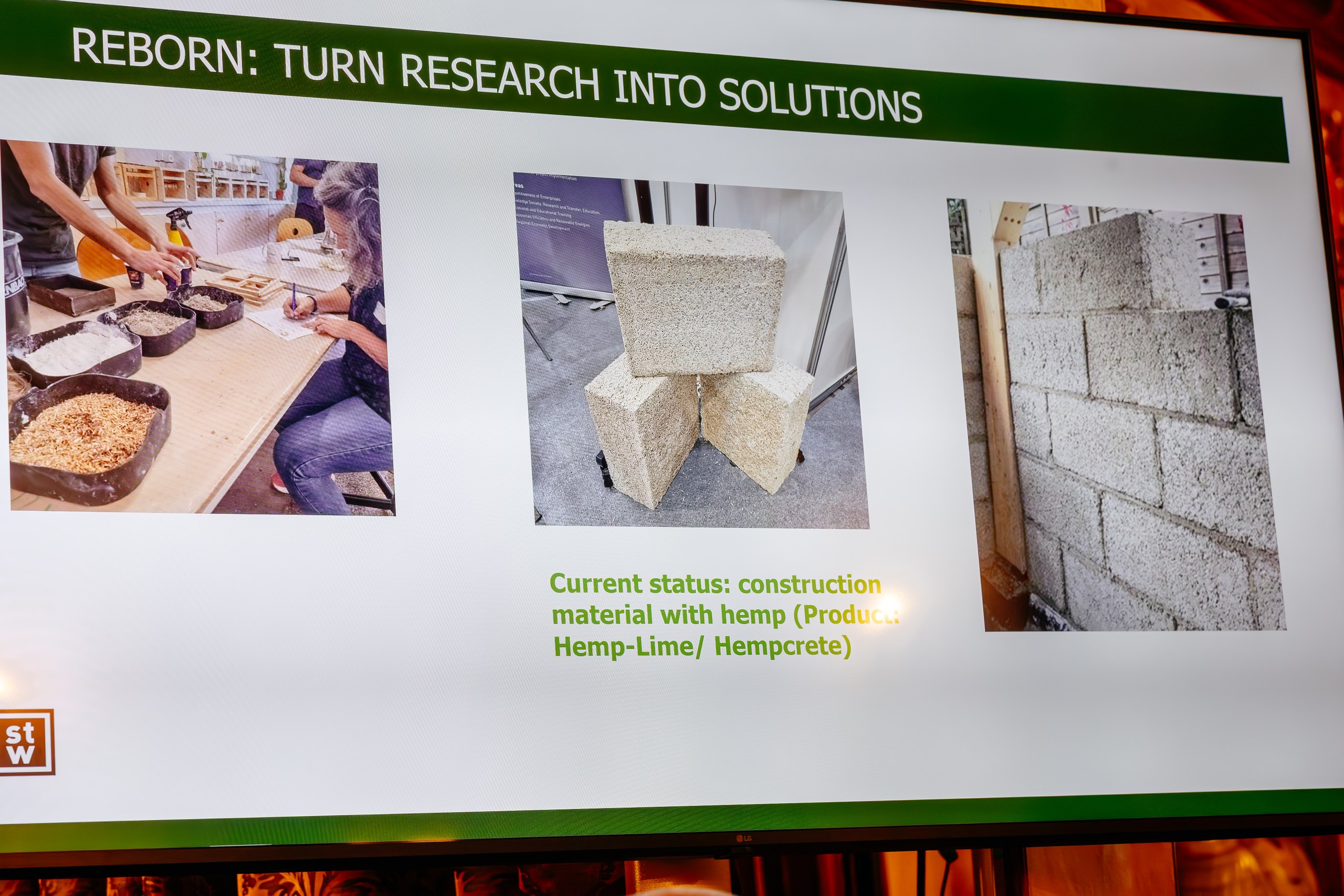
ReBORN demonstrates how research and market actors can jointly drive innovation for climate protection. The project focuses on sustainable construction materials based on locally available natural resources and combines development, testing, and implementation within one integrated approach. It addresses the field of energy efficiency in buildings—a market strongly shaped by regulatory frameworks, public procurement, and administrative requirements.
A central element is the co-creation of solutions with practice. Research is developed in close interaction with industry partners and relevant stakeholders, ensuring that materials, methods, and solutions respond to real needs, standards, and framework conditions.
The project follows a structured pathway from research to application:
- development and testing of sustainable materials
- validation through pilot projects under real conditions
- transfer of best practices for energy-efficient and climate-friendly construction
In addition, ReBORN provides concrete outputs for market actors. These include guidelines and tools for authorities, architects, engineers, and companies, supporting the transition towards Zero-Emission Buildings (ZEB), as well as capacity building and training in climate-neutral planning, procurement, and construction practices.
Through stakeholder engagement at local and national levels, the project also contributes to integrating new solutions into policies and standards.
The project consortium is led by the Danube Delta National Institute for Research and Development, which is also among the research institutions participating in Future LAB.
The presence of the Danube Delta National Institute for Research and Development, lead partner of the ReBORN project, further underlined the connection between Future LAB and ongoing applied research initiatives. The institute was represented by Edward Bratfanof, Director of the Technological Information Center.
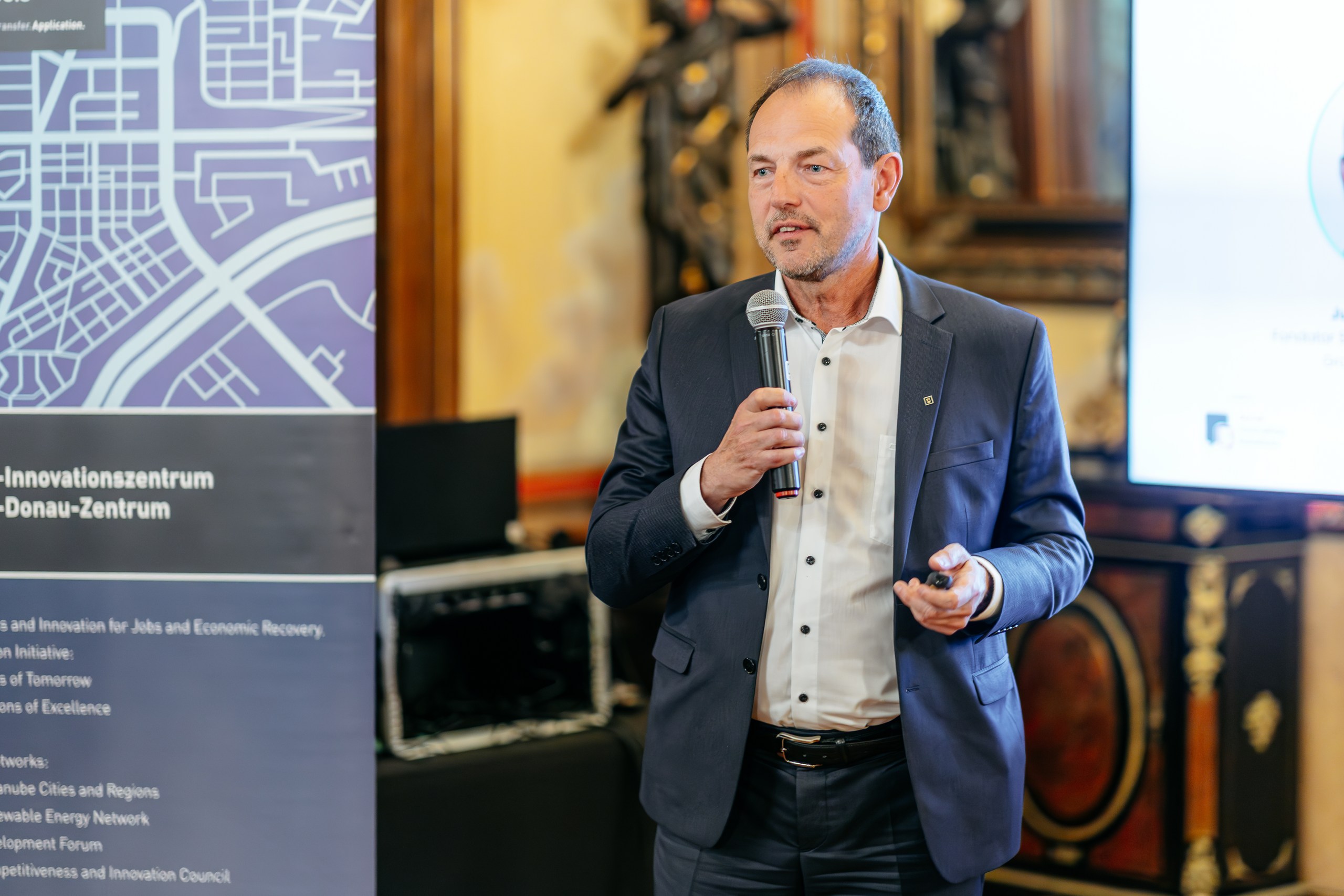
The ReBORN project was additionally presented by Roxana Boboruta, Deputy General Manager of Steinbeis Transfer Management Romania and Senior Project Manager at Steinbeis Danube Center, who invited participants to actively follow and contribute feedback to the project’s further development.
The Steinbeis Contribution: A Demand-Driven Approach
Building on the ReBORN example, Steinbeis highlighted a key principle during the session: successful technology transfer requires a shift from supply-driven to demand-driven innovation processes.
Rather than starting from existing research results, a demand-driven approach begins with concrete needs from industry, society, and public stakeholders. This requires integrating market and economic knowledge from the very beginning, involving partners early, and validating solutions under real conditions.
This approach is at the core of the Steinbeis model, which connects research and business through project-based collaboration and ensures that innovation is aligned with practical application and implementation requirements.
In addition, the EUKI programme was presented as a valuable framework for developing such approaches, offering organisations in Romania concrete opportunities to initiate projects and build international consortia in the field of climate and environmental innovation.
Building on this, the Cluster for Sustainability 3D—established within the EUKI-funded EDAPHIC-BLOOM project—was introduced as an immediately available platform to support research institutions participating in Future LAB. The cluster connects research, industry, and public actors and is designed to facilitate collaboration, project development, and the practical application of innovative solutions. Steinbeis Danube Center and the Danube Delta National Institute for Research and Development are among its founding members.
From Potential to Impact: What Needs to Change
Future LAB demonstrated that the potential of research in Romania is significant—but unlocking this potential requires more than individual excellence. It requires structures that systematically connect research with application.
This includes access to validation and testing environments, collaboration with industry partners, and mechanisms that support the transition from early-stage results to market-ready solutions. Equally important is the integration of public stakeholders, particularly in sectors such as construction and energy, where regulatory frameworks play a decisive role.
To support such developments, existing platforms can be leveraged. The Cluster for Sustainability 3D, emerging from the EUKI-funded EDAPHIC-BLOOM project, provides a framework for collaboration between research institutions, companies, and public actors, enabling the further development and application of innovative solutions.
Why Steinbeis Engages in Initiatives like Future LAB
By contributing to Future LAB, Steinbeis aims to demonstrate practical pathways from research to market and to strengthen awareness for demand-driven technology transfer.
With projects such as ReBORN and through its international network, Steinbeis connects research institutions, companies, and public actors—supporting the development, validation, and implementation of solutions that address real-world challenges.
About Social Innovation Solutions
Social Innovation Solutions (SIS) develops programs and platforms that support the commercialization of research and the transition towards sustainable and innovation-driven economies in Central and Eastern Europe.
The organisation works with SMEs, NGOs, and research institutions, providing tools, resources, and collaboration formats to advance technology transfer and innovation. Over the past eight years, SIS has supported more than 30,000 SMEs and 7,500 young people, provided grants of over 450,000 euros, and collaborated with more than 150 organisations across over 10 countries.
Gallery


Work with Steinbeis
- For researchers: Support in bringing research results to application and market
- For companies: Access to applied innovation and technology solutions
- For institutions: Development of international projects and partnerships (e.g. EUKI)