
Driving Climate Action through Innovation and European Cooperation: Steinbeis at EUKI Networking Conference
Berlin, 19.-20.05.2026
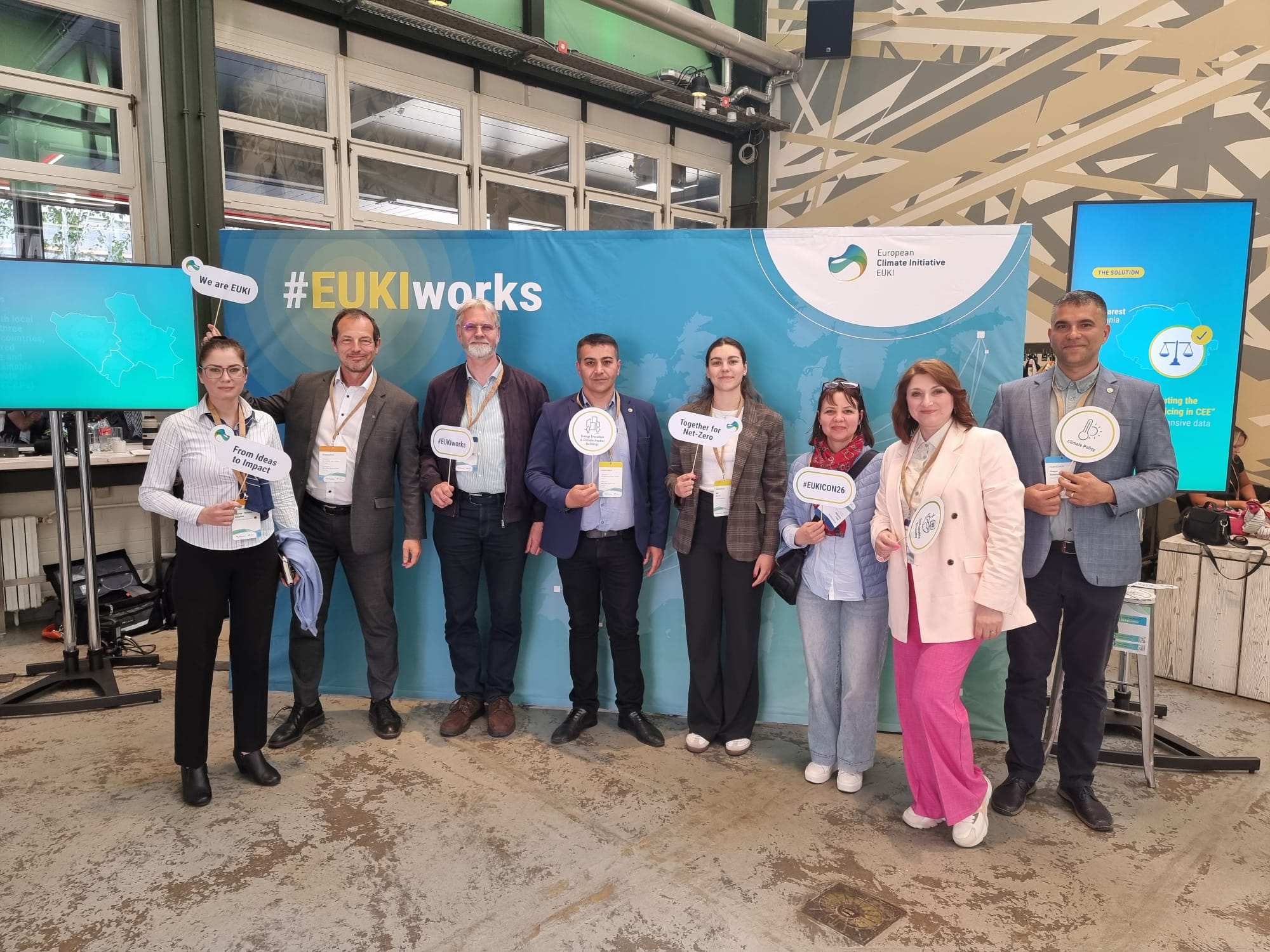
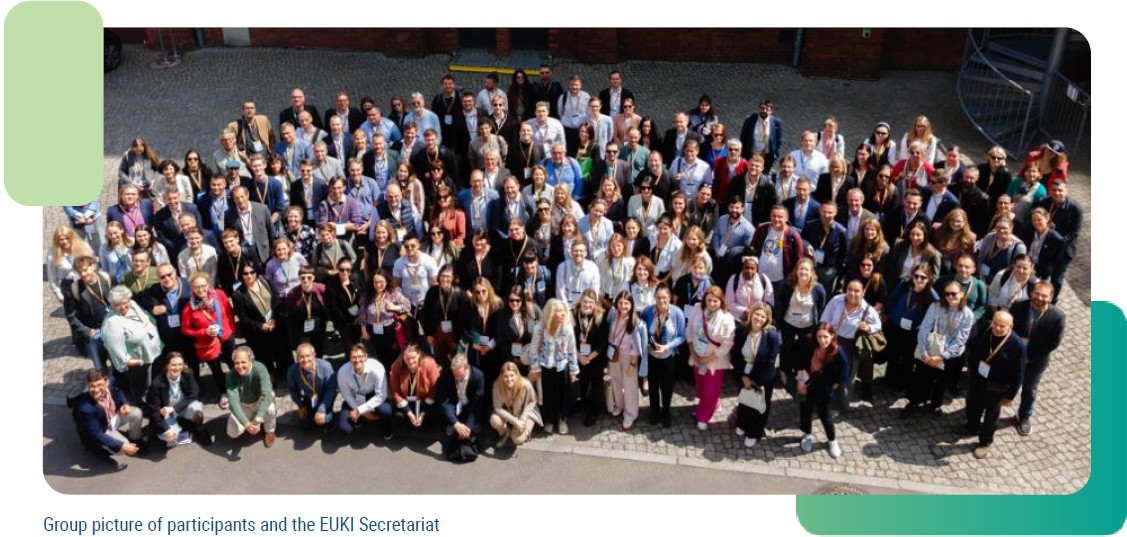
Steinbeis experts Juergen Raizner and Roxana Boboruta participated in the EUKI Networking Conference 2026 in Berlin, bringing together 201 participants from 123 organisations and 49 climate projects across 24 countries. Under the theme “Doubling Down on Climate Action Amid Shifting Priorities”, the conference explored how climate action can be advanced alongside economic competitiveness, energy security and social cohesion in a rapidly changing geopolitical environment.
A central message throughout the conference was that these objectives must be pursued together rather than treated as competing priorities. Speakers from the German Federal Ministry for the Environment, the European Commission, think tanks and civil society organisations emphasized the need to accelerate renewable energy deployment, electrification, clean technology manufacturing and climate-neutral industrial development while maintaining public support and ensuring a socially just transition.
Discussions also highlighted the growing interdependence between climate policy, economic resilience and European security, with particular attention to energy independence, critical raw materials, resilient supply chains and international cooperation.
A series of workshops translated these strategic debates into practical approaches and actionable solutions. Topics ranged from the 15-minute city concept and methane reduction to just energy transitions, circular economy initiatives, carbon capture and storage (CCS), peatland restoration, pathways beyond natural gas, and strategies for addressing climate scepticism.
Against this backdrop, Steinbeis experts Juergen Raizner and Roxana Boboruta participated in a range of site visits, workshops and networking activities that provided practical insights into current approaches to sustainable urban development, climate resilience and effective international cooperation.
Project Background: Revitalising Buildings through Education, Optimisation and Renewable Norms (ReBORN)
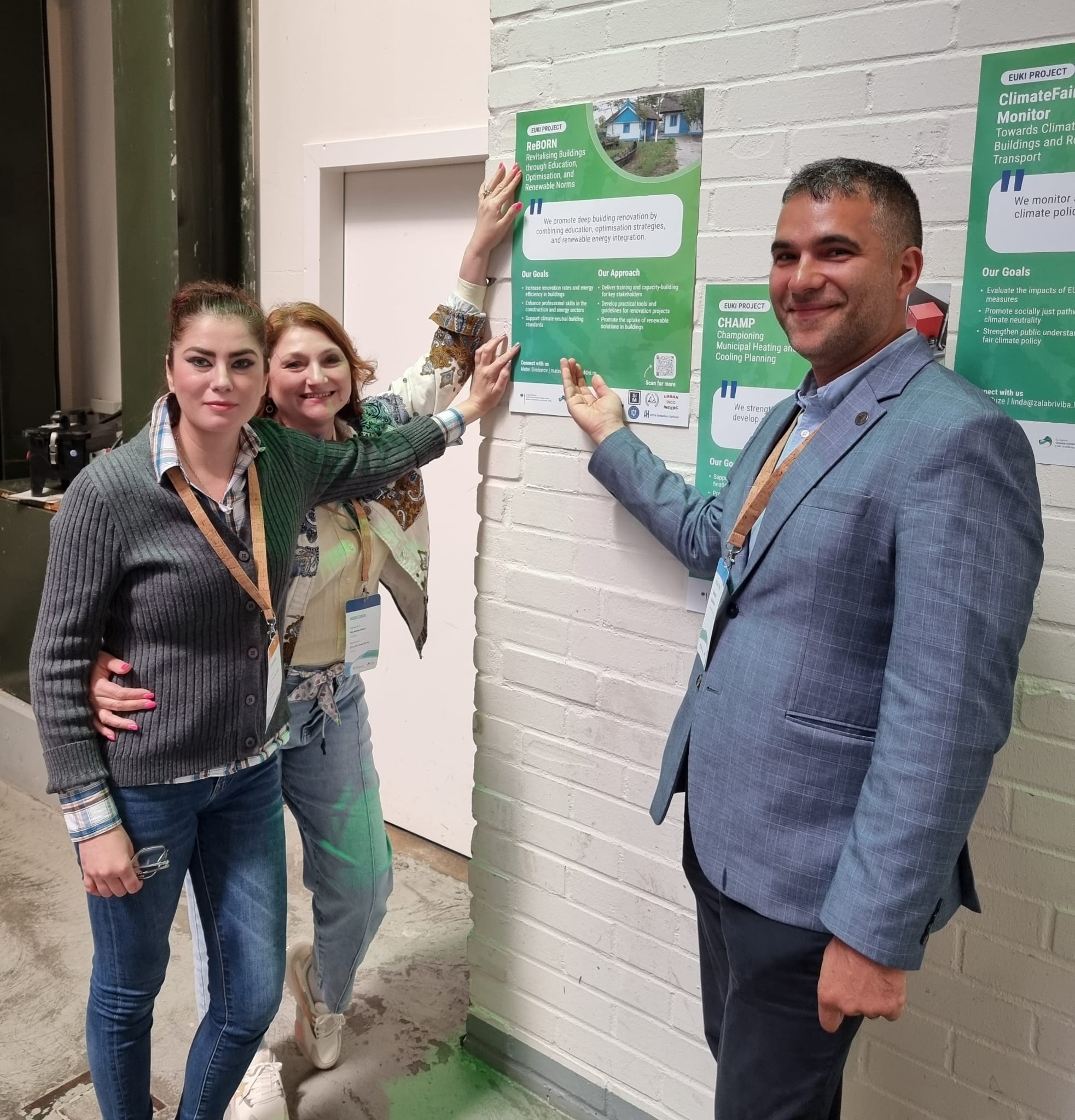
ReBORN is an EUKI-funded project that promotes energy-efficient and climate-friendly construction practices in Romania, Croatia and Germany. The project focuses on the use of locally sourced natural building materials, such as reed and hemp, capacity building for construction professionals, and the transition towards Zero Emission Buildings (ZEB).
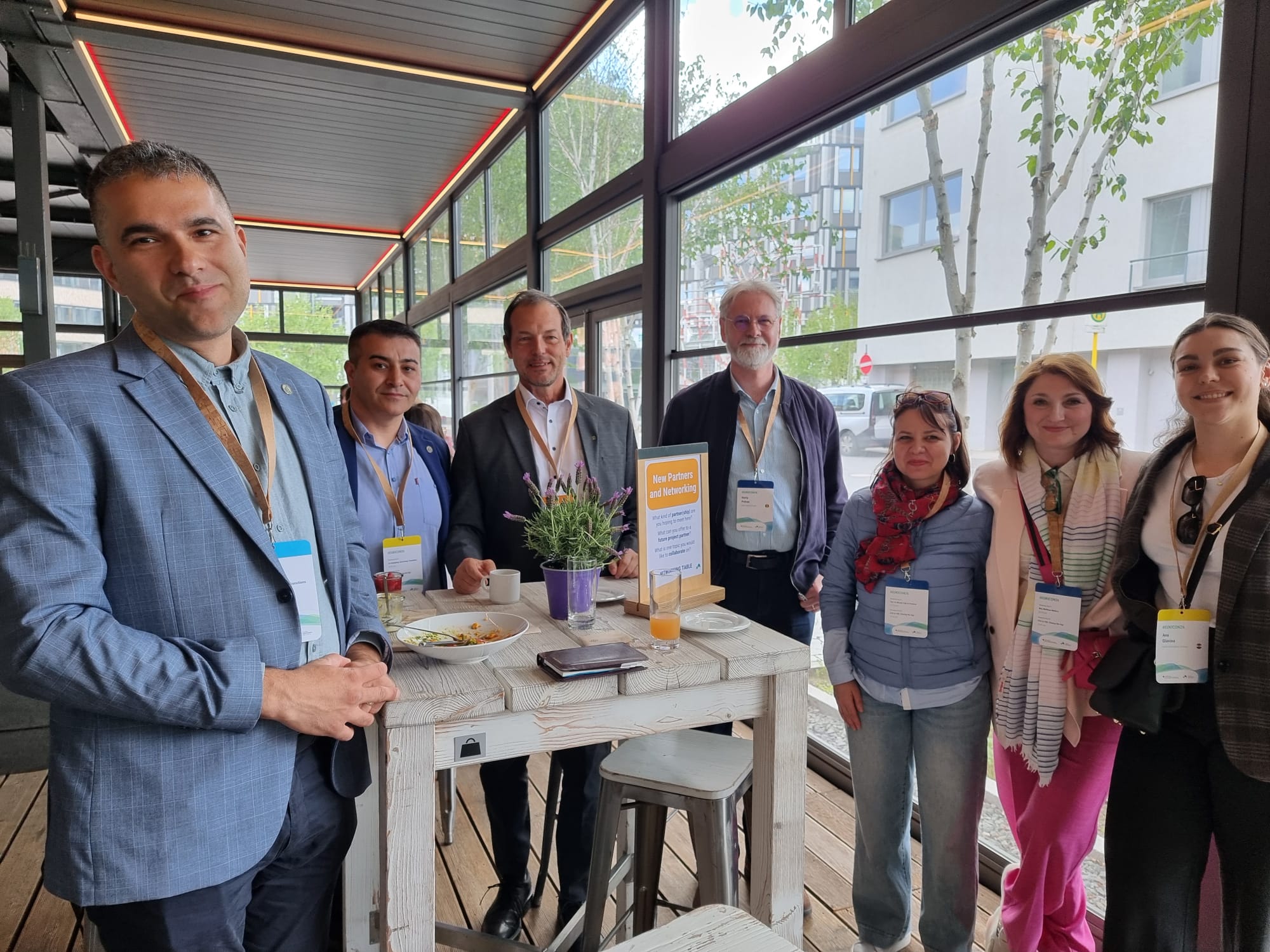
The EUKI Networking Conference 2026 provided an excellent opportunity for representatives of all ReBORN partner organisations from Romania, Croatia and Germany to meet, exchange experiences and discuss ongoing project activities while engaging with climate experts, policymakers and project teams from across Europe.
Steinbeis Participation
Visit to EUREF-Campus Berlin
As part of the conference programme, Steinbeis experts Juergen Raizner and Roxana Boboruta, both involved in the ReBORN project, participated in several study visits and workshops. The first activity was a visit to the conference venue itself – the EUREF-Campus in Berlin-Schöneberg.
Developed as a private investment project, the 5.5-hectare campus comprises approximately 165,000 m² of energy-efficient office and event space and hosts more than 100 companies and organisations, including Deutsche Bahn and Schneider Electric. The campus serves as a prominent example of sustainable urban development and innovation in the field of energy and climate technologies.
Particularly impressive were:
The Gasometer – a historic 78-metre-high gas holder that has been transformed into a modern office and event facility while preserving its industrial heritage.
The campus’ green buildings – high-efficiency office buildings that already meet the climate and energy standards envisaged for 2045, featuring solar shading systems, triple-glazed façades and rooftop photovoltaic installations.
15-Minute City Workshop
The workshop was led by Ondřej Mirovský, former Deputy Mayor of Prague and current Director of the Centre for Transport and Energy (CDE), a leading Czech expert in urban mobility and climate policy.
The 15-minute city concept aims to support municipalities in transforming urban districts into more self-sufficient neighbourhoods where residents can access essential services, workplaces and public amenities within a short distance of their homes. Drawing on practical experience from Prague 7, Ondřej Mirovský highlighted several challenges that cities face when implementing this approach:
- Many cities and transport systems continue to be designed primarily for cars rather than for people.
- In many Central and Eastern European countries, extensive privatisation has resulted in fragmented land ownership, making it more difficult for municipalities to implement integrated urban development measures.
- Urban greening initiatives, including tree planting, are often constrained by existing underground infrastructure such as utility networks, cables and pipelines.
The workshop provided valuable insights into the practical challenges of creating more sustainable, liveable and climate-resilient urban environments.
Practical Insights into Circular Energy Systems
The workshop introduced the EUKI project Building a European Peatlands Alliance, highlighting the importance of a stronger European network dedicated to the preservation and restoration of peatland ecosystems and the wide range of environmental services they provide. The session was led by Marina Skunka from Eurosite – The European Land Conservation Network and Eliza Ohegyi from CEEweb for Biodiversity.
A key conclusion of the workshop was the importance of paludiculture – the productive use of wet and rewetted peatlands – as an effective approach to peatland restoration while maintaining economic value for local communities.
For the ReBORN project, participation in this workshop was particularly relevant, as Dr. Iulian Nichersu, Scientific Director of the Danube Delta National Institute for Research and Development in Romania and a member of the ReBORN Scientific Board, is a recognised expert in the field of paludiculture. The workshop provided valuable insights into current European initiatives and highlighted future opportunities for knowledge exchange and cooperation. This is especially relevant for Romania, which has significant potential for peatland restoration and is among the leading countries in Europe in this field – no. 3 in Europe after Germany and Poland.
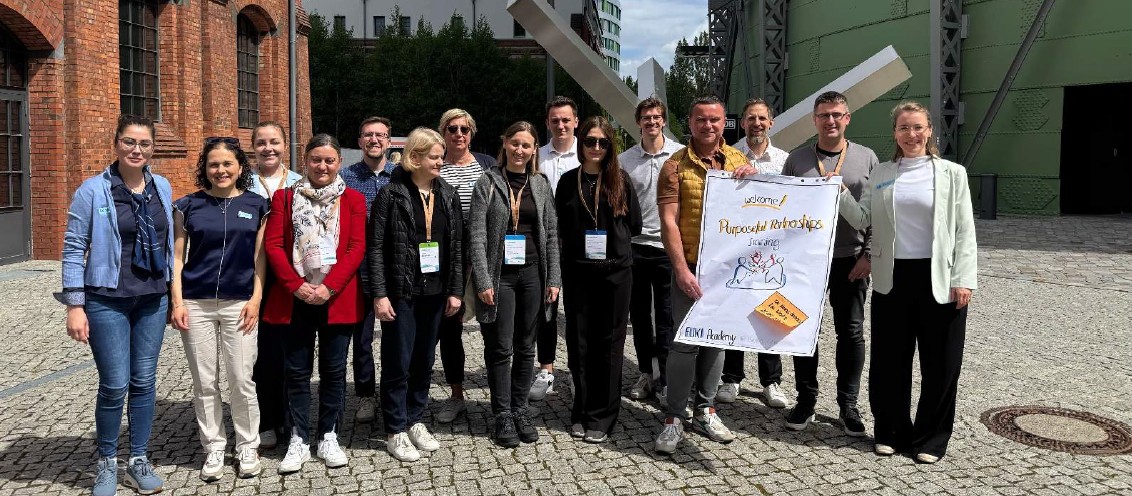
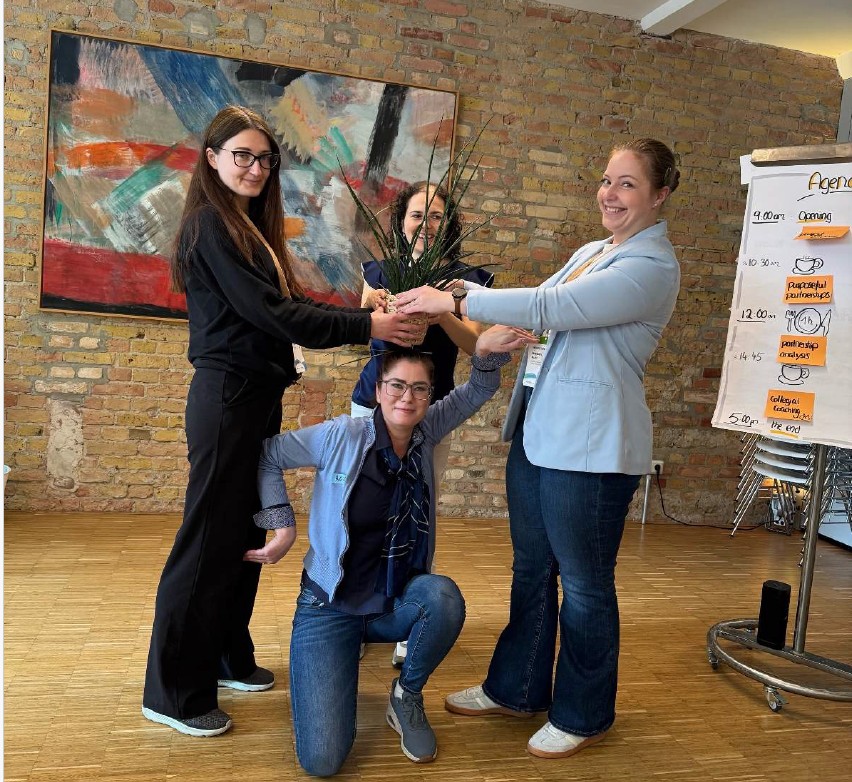
EUKI Purposeful Partnerships Academy
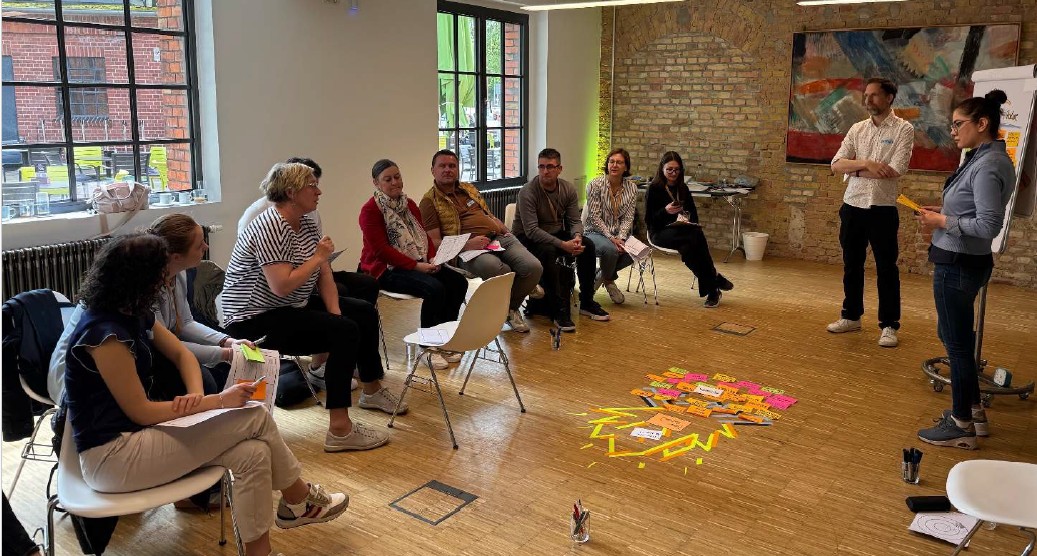
A full day of the conference programme was dedicated to strengthening project partnerships and improving collaboration within international consortia. Particular attention was given to communication, coordination and the effective management of implementation challenges, especially those faced by lead partners.
The training was facilitated by Marcus Andreas and Lia Weiz, experts in moderation, facilitation and climate-related capacity building, on behalf of the Deutsche Gesellschaft für Internationale Zusammenarbeit (GIZ).
The interactive methodology encouraged participants to share experiences from their own projects, discuss common challenges and exchange practical solutions. During the workshop, participants were introduced to PIANO, a tool developed by GIZ to support rapid partnership assessments and strengthen cooperation within project consortia. The tool helps identify strengths, potential risks and opportunities for improved collaboration, thereby contributing to the successful achievement of project objectives.
The workshop highlighted the importance of trust, transparency and a people-centred approach to partnership management. It also provided valuable opportunities for peer learning and exchange among organisations working on climate-related initiatives across Europe.
“
EUKICON2026 provided an excellent opportunity to connect with organisations across Europe that are addressing similar climate challenges through different initiatives and approaches. The conference demonstrated the value of international cooperation and peer learning, while the EUKI programme continues to offer a strong platform for knowledge exchange, partnership building and the sharing of practical experiences.
— Roxana Boboruta, ReBORN Senior Project Expert
Interested in Climate and Sustainability Projects?
Our Danube Center supports organisations, municipalities and research institutions in developing international partnerships, innovation projects and sustainable transformation initiatives.